
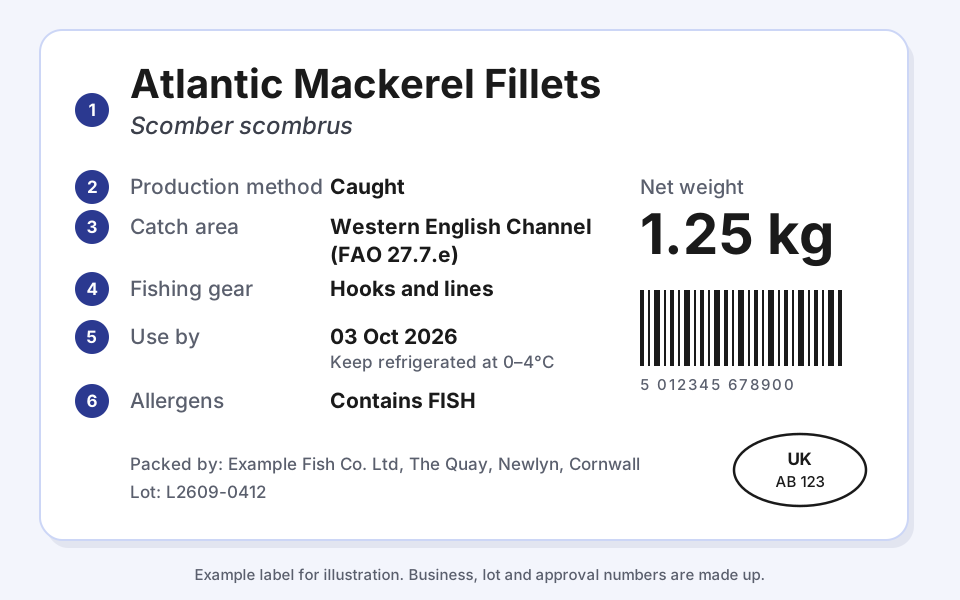
The short answer: fish and shellfish sold to consumers in the UK must show the commercial and scientific name of the species, how it was produced (caught, caught in freshwater or farmed), where it was caught or farmed, the type of fishing gear used, whether it has been defrosted and, where appropriate, a best-before or use-by date. Between businesses, every lot also has to carry traceability details such as a lot number, the vessel, the catch date and the net weight.
That's the headline. The detail is where most labelling problems start, so here it is in plain English.
Two sets of rules, not one
A lot of confusion comes from mixing up two different requirements:
- Consumer information: what the shopper (or the shop selling to them) needs to know about the fish.
- Supply-chain traceability: what has to travel with each lot from boat to buyer, so any fish can be traced back to where it was caught.
The first mostly ends up on the retail label or ticket. The second lives on the box labels and paperwork that move between you, your suppliers and your customers. You need both, and the consumer information has to be passed down the chain so the business at the end can show it.
1. What the consumer needs to see
The core list comes from Article 35 of the retained Common Market Organisation regulation (Regulation 1379/2013). The Fish Labelling Regulations 2013 enforce it in England, and Scotland, Wales and Northern Ireland have their own equivalents. It covers fresh, chilled and frozen fish, crustaceans and molluscs, lightly processed products such as smoked, salted and dried fish, and seaweed. Prepared products such as fishcakes, breaded fillets or tinned fish fall outside this list, but the general food labelling rules below still apply to them.
| What | What it means | Example |
|---|---|---|
| Commercial and scientific name | The approved common name plus the Latin name | Atlantic cod (Gadus morhua) |
| Production method | One of three set phrases | "caught", "caught in freshwater" or "farmed" |
| Catch or farming area | Where it came from (rules below) | Western English Channel (FAO 27.7.e) |
| Fishing gear category | For wild-caught fish only | Trawls |
| Defrosted | If it was frozen and is sold defrosted | "Defrosted" |
| Date | A use-by or best-before date where appropriate | Use by 3 Oct |
Getting the catch area right
This is the one that trips people up most often.
- Sea-caught fish need the FAO fishing area. If the fish came from the North-East Atlantic (FAO area 27, which covers UK waters) or the Mediterranean and Black Sea (FAO 37), you also need the name of the sub-area or division in words, not just a code. "FAO 27" on its own isn't enough for a Cornish mackerel.
- Freshwater fish need the body of water and the country.
- Farmed fish need the country where the fish reached more than half its final weight or spent more than half its rearing period. For shellfish, it's the country of the final rearing stage of at least six months.
Fishing gear categories
For wild-caught fish, the label shows one of these categories: seines, trawls, gillnets and similar nets, surrounding and lift nets, hooks and lines, dredges, or pots and traps.
The general food labelling rules still apply
On top of the fish-specific list, prepacked products need everything any food needs: allergens (fish, crustaceans and molluscs are all on the list of 14), net quantity, storage conditions, and the name and address of the business. If you're an approved establishment, you also need your identification mark. For fish sold loose, the information can go on a ticket or sign next to the product.
2. What has to travel with every lot
This is the traceability side, and it's enforced by the Marine Management Organisation (MMO) in England. Their guidance says that for a lot to be adequately labelled it should carry:
- the ID number of the lot
- the name and PLN (port letters and number) of the fishing vessel
- the FAO code, common name or scientific name of each species
- the date of catch or production
- the quantity of each species in kilograms, net weight
- the name and address of the supplier
- the relevant ICES area
- the production method (caught or farmed)
- the gear code, for example TBB for beam trawl
- the best-before date
- whether the fish has previously been frozen
For first sale, the MMO also asks for the trip dates or landing date and the port of landing, so the buyer can complete sales notes correctly.
A few practical points from the MMO's own FAQ:
- Every box needs a label. At minimum, each box or bag needs a unique ID that links it to the documents for its lot.
- Paper isn't required. Electronic labels such as barcodes or QR codes are fine, as long as fisheries inspectors can see the information at any time.
- Lots can be split or merged after first sale, but only if you can still trace them back to the catch. A merged lot needs the details of every vessel in it.
- Small direct sales are exempt. Fish sold straight from the boat to the public doesn't need a label if the sale is £45 or less per person per day.
Common mistakes we see
- Boat tallies that only show the vessel name and PLN. The MMO is clear that this doesn't meet the requirements on its own.
- Gross weight instead of net. The declared weight is the fish after processing, without the box or ice.
- Old labels left on reused boxes. If you reuse boxes, strip every old label so the only one left matches what's inside.
- Catch area lost at intake. If the area and gear don't get recorded when fish comes in, nobody further down the line can put them on the label.
- "Defrosted" forgotten on fish that was frozen for storage and then thawed for sale.
- Transport documents used as labels. They usually don't include the gear, so they don't meet the requirement unless that's added.
Making it painless
The businesses that find labelling easy have one thing in common: they record the information once, at intake, and never type it again. Species, catch area, gear, vessel and dates are captured when the fish arrives. From then on, every label, box and invoice pulls from that record.
That's how our Aquarius labelling system works. Details are captured at goods in, each box is weighed and labelled with a barcode at the packing station, and scanning that barcode brings up the full traceability record, right through to despatch and invoicing. If you're still handwriting labels or re-keying data, we'd be happy to show you what that looks like.
Quick answers
Can I use a QR code or barcode instead of printing everything on the box? Yes, for supply-chain traceability. The MMO accepts electronic labels, as long as the information is available to inspectors whenever they ask.
Do I need to label fish I sell directly off the boat? Not if each sale is £45 or less per person per day. If the fish is stored or transported before sale, it should be labelled.
What weight goes on the label? Net weight in kilograms: the fish after processing, without the box, bag or ice.
Do I need the scientific name on consumer labels? Yes. The commercial name and the scientific name are both required.
Does this apply in Northern Ireland? Northern Ireland has its own rules and some additional requirements. Check the Food Standards Agency's guidance if you sell there.
Sources
- Traceability and labelling information for fisheries products (Marine Management Organisation, GOV.UK)
- Labelling fisheries products: FAQs, v3 (MMO, July 2025)
- Regulation 1379/2013, Article 35: mandatory information and Article 38: catch or production area (legislation.gov.uk)
- The Fish Labelling Regulations 2013 (legislation.gov.uk)
- Fish labelling and supply chain traceability (Seafish)
This guide reflects the guidance published as of September 2026. It's a practical summary, not legal advice. If you're unsure about a specific product, check with your local trading standards or port health authority.